
Background
If you were to take a look at worldwide gathered data, what would you find as the leading death factors? Ranked at 1, according to Ritchie, Hannah, and Max Roser’s “Obesity” from Our World in Data, it would be high blood pressure at 10.85 million people, smoking, air pollution, high blood sugar, and then at a solid close behind number 5 at 5.02 million, obesity. In recent calculations, roughly 500 million people are considered obese, double the rate since 1980. Specifically, to be considered obese, it requires a BMI of 30 or higher. Easily known to many many people, obesity has many of its own risks and diseases that follow. If it’s not already known, it should be, since it is fifth on the list for death factors, meaning that something about it causes health issues. These health issues include chronic diseases, premature death, and significant increase in healthcare costs. More specifically, these health issues include type two diabetes, cardiovascular diseases, hypertension and stroke, muscular and skeletal problems (osteoarthritis), and many forms of cancer. These types of cancer include breast, colon, gallbladder, kidney, and prostate (Benjamin Senaur and Masahiko Gemma 2006). Like stated before, all of this comes from one common factor, obesity.
Taking a deeper dive into these stats though, they can mostly be collected in one specific area, America. America has one of the highest obesity rates, ranked at 10 out of the entire world. Out of 195 countries on this globe, America is the 10th highest, obviously meaning that we have one of the highest calculated obesity rates (World Obesity Federation Global Obesity Observatory 2016). To support this data, roughly two thirds of Americans are overweight or obese, specifically higher in non-hispanic black, black, and Mexican Americans (Harvard TH. Chan “Adult Obesity” 2012). This then makes plenty of sense, of course being the 10th most overweight country, over 50% of all adults will fall under this category. This completely supports the idea that compared to other countries, America suffers from this because of unhealthy living environments, less regulated foods and agricultural industries, and socioeconomic and behavioral factors and since it’s one of the leading death factors, it needs to be changed and more brought to light, considering the amount of people it affects. To dumb it down, it basically means that America struggles with nutrition and exercise habits, much unlike countries with lower obesity rates like Japan for example.
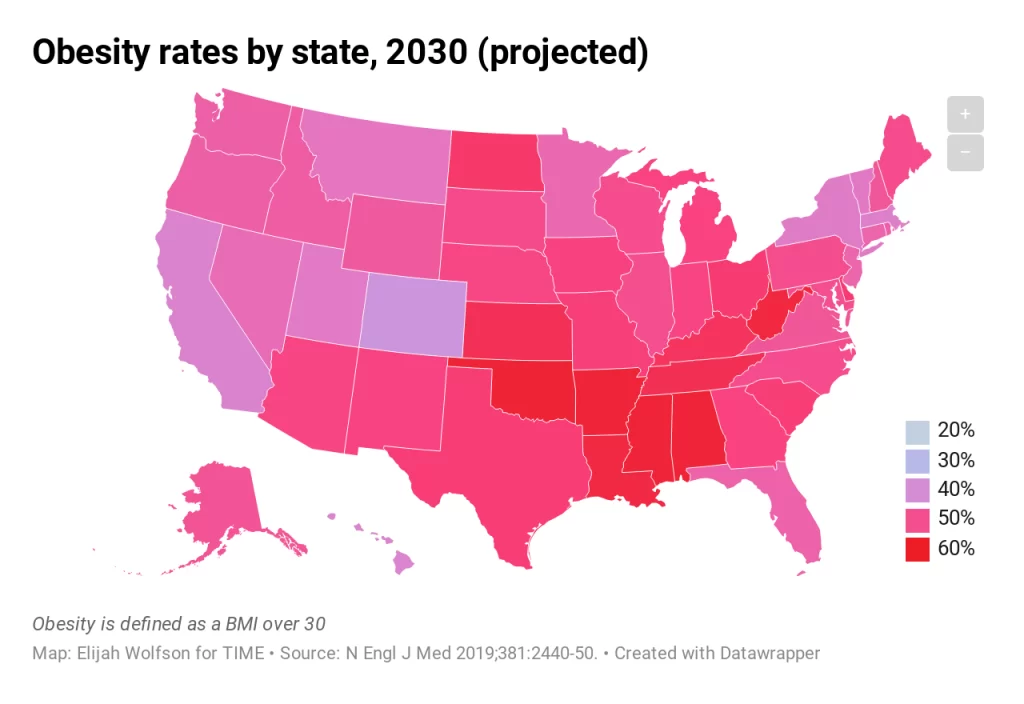
Park, Alice. “Half of the U.S. Population Will Be Obese by 2030.” Time, Time, 18 Dec. 2019, time.com/5751551/us-obesity-by-state/.
American Food and Nutrition
Not only in America are there struggles with obesity, all around the globe the causes of it regard food, activity, and sleep, social determinants of health, genetics, illness, and medication. However, specifically in the US, we have more of these impacting factors. Americans usually follow what has become a typical western diet. These diets include large meals that contain highly refined grains, red meat, unhealthy fats, and sugary drinks (Harvard TH. Chan,“Obesity Causes” 2012). These meals have been noted to be significantly larger portioned than that of those in other countries. America has what would be considered as a toxic food environment. Since we are so forward technologically, there is an incessant and unavoidable marketing of unhealthy food and drinks. They are easily televised and advertised in ways that have become more apparent and more appealing. Almost all Americans have access to the internet which makes it extremely easy for all companies like this to spread their product and make it appeal to the public. The advertisement industry has moved so forward and can now directly target and appeal to the proper audience. Going along with that, drive-through meals or fast foods are not only being advertised, but are extremely accessible, cheap, and filling (Public Health 2022). Another factor regarding food is that junk food that’s extremely high in sugars and fats are easily accessible and once again, cheap. You can find them brightly displayed in great quantities in every single store nearby. American foods have become so unhealthy because, according to PublicHealth.org’s “Obesity in America,” companies have started swapping hydrogenated oils; which are reconstructed vegetable oils that contain high levels of trans fats, and sugars for the animal fats that they have removed from low fat products.
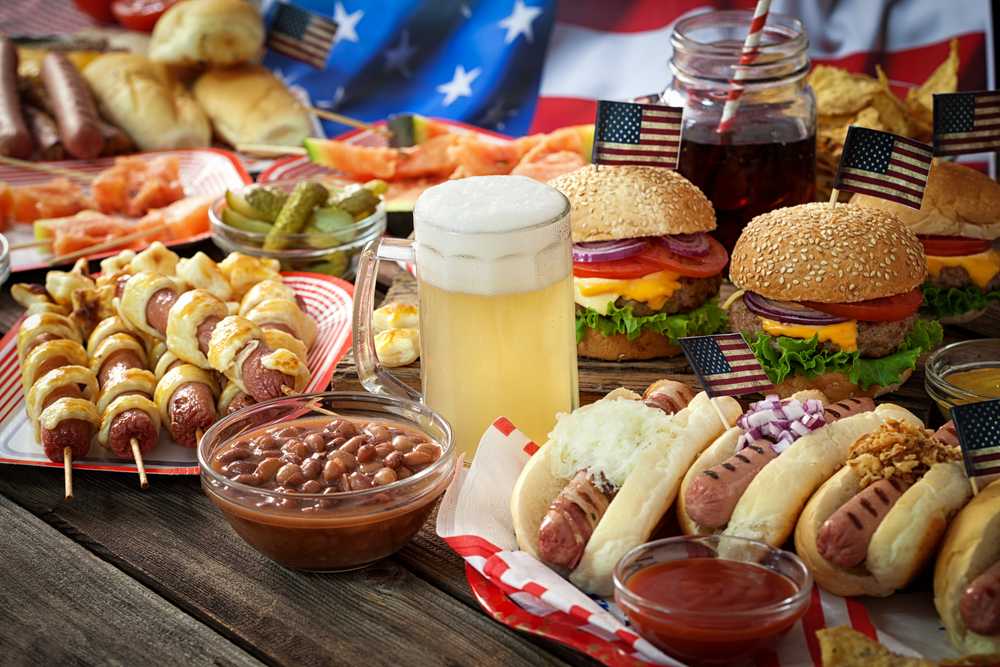
Gulshan. “The 10 Most American Foods of All Time.” Corrie Cooks, 15 May 2023, www.corriecooks.com/the-10-most-american-foods-of-all-time/.
American Exercise
Shifting away from foods, the amount of exercise in America also seriously impacts the proportionally larger quantity of overweight individuals. The working environment has completely changed from what it once was. The average American around the 1960s was most likely working in a field or a factory, where many of the common jobs were found, but now many more jobs can be found in an office at a desk, with little to no movement required. Data shows that only 20% of jobs now require at least moderate physical activity while previously at least 50% required this moderate physical activity (Public Health 2022). Elaborating on this, people spend more time at work and less in their homes which takes away from the ability to make homemade healthier foods for meals and encourages the shift to buying quick and easy fast food meals or premade meals that are high in trans-fats. Not only do they not have time or space to make a sufficiently healthy meal, many people don’t have enough time in their day to attend a gym or commit to exercise. For Americans, it requires a conscious commitment to exercise which comes at not only a timely cost, but a monetary cost (a gym membership, for example). There also is sometimes a lack of safe areas for exercise. This lack of exercise also relates back to what was mentioned beforehand, in the past, the majority of jobs entailed heavy physical activity, so people were basically being paid to exercise, not just having to make time in the little free time they have for it (Senaur and Gemma 2006).
Comparing America’s Downfalls to Japan’s Ideals
Since America is one of the top countries that contain the most obese individuals, it’s extremely important to compare the differences between that of one country that has a lower rate of obese individuals. One specifically would be Japan. Japan is ranked 161 out of 200 countries, with a 7.63% obesity rate (World Obesity Federation Global Obesity Observatory 2016). This is significantly less than America’s rate, precisely 34.01% less. Firstly, the average Japanese person consumes far fewer calories and less fat than Americans. Their average carbohydrate consumptions were significantly higher in both American men and women. Specifically for example, a Japanese man, on average per day, consumed 1,930 calories, while an American man, on average per day, consumed 2,516 calories (Senaur and Gemma 2006). This would make sense however, considering that the Japan diet emphasizes rice, vegetables, fish, and contrary to the American diet, very little fats. This traditional diet keeps people thinner and healthier than many other industrialized countries. Relating back to the American diet too, this traditional diet contains portions that are significantly smaller, contrasting with the largely portioned American meals. The Japanese usually have many different courses, yet the courses only contain small pieces or bites (Petre 2019). This increases and improves the variety of their diet, allowing for more health requirements to be reached. Though the portions may be smaller, the prices of Japanese foods are higher. One may think that this influences them to choose cheaper, less healthy options, but no, more likely than not, they will spend more money on higher quality foods. They end up spending more money on a lower quantity of higher quality items than Americans spend on a greater quantity of poorer quality items.

Blog, Japan Wonder Travel. “15 Typical Japanese Meals at Home and How to Cook Them.” Japan Wonder Travel Blog, 26 Jan. 2022, blog.japanwondertravel.com/japanese-meals-at-home-25119.
Once again, not only regarding food, the average Japanese individual is far more physically active than the average American individual. They walk more during the day, not specifically as “planned exercise,” but as part of their daily life. Americans, however, consider 30 minutes of activity, even a walk, to be “planned exercise,” so even a walk to work to Americans would be considered their exercise for the day (Senaur and Gemma 2006). Not only is the food pricing different in America, but the pricing of owning a personal vehicle and public transportation is different. It’s far more expensive in Japan to own a personal vehicle; gas is almost double that of America. Public transportation, on the other hand, is cheaper than that of America’s public transportation. This also would encourage more Japanese walking because public transportation always entails walking, whether it’s to the station or bus stop from your house or work, and back (Muhlbaum 2022).
Solutions
Because this is such a large problem not only in the US, but around the world, there have been many solutions introduced. Especially in the US, people are working to lower this extremely high rate of obesity. Lowering this is something that usually needs to happen on more of a personal level, it’s not something that can just be done for the individual. They need to recognize it and take steps to stop or prevent it. The obvious solutions based on all the data collected and compared are to eat better and exercise more. Avoiding concentrated calories that lack nutrients, examples being sweets, fried foods, and fatty servings of meat, is extremely important in losing weight (Meldrum, Morris, and Gambone 2017). Replacing these with more nutrient dense foods with foods that contain a greater water content and fewer calories is extremely important too. These types of foods are similar to what Japanese eat in their traditional diet, leafy greens, vegetables, whole fruit, and fish. Not only watching what specifically is eaten, but also reducing the large portion sizes that are so prominent and the “usual” in the US. This is easily done by sharing or saving leftovers and avoiding buffets and all you can eat to prevent overeating. Another huge thing that companies have done was being required to have nutrition facts on the containers or wrappers of items. This allows the consumer to easily read what is in the food they’re consuming and know every ingredient and amount of carbohydrates, sugars, fats, and proteins, which helps people if they’re dieting or trying to avoid something.
Some other solutions not specifically regarding the consumption of food have also been highly encouraged. Receiving psychological support from a trained healthcare professional is helpful in changing the way you view food and eating if you struggle (NHS Inform 2023). According to, Contemporary Medical, Device, and Surgical Therapies for Obesity in Adults, they also can recommend doctors that can prescribe anti-obesity medications and bariatric surgery. These improve the maintenance of weight loss and other related health gains. Specifically, the medications target the central appetite pathways to reduce hunger and food reward. Not only seeing some sort of doctor, limiting screen time and “sit time” is extremely helpful, try and stay standing and moving around (Harvard School of Public Health 2016). Reflecting back, take Japan for example, they disclude walking from their actual exercise, and still exercise on top of that. People can start trying to follow these types of ideals and start walking places, taking more public transportation, and trying to make time for it instead of being glued to a screen.
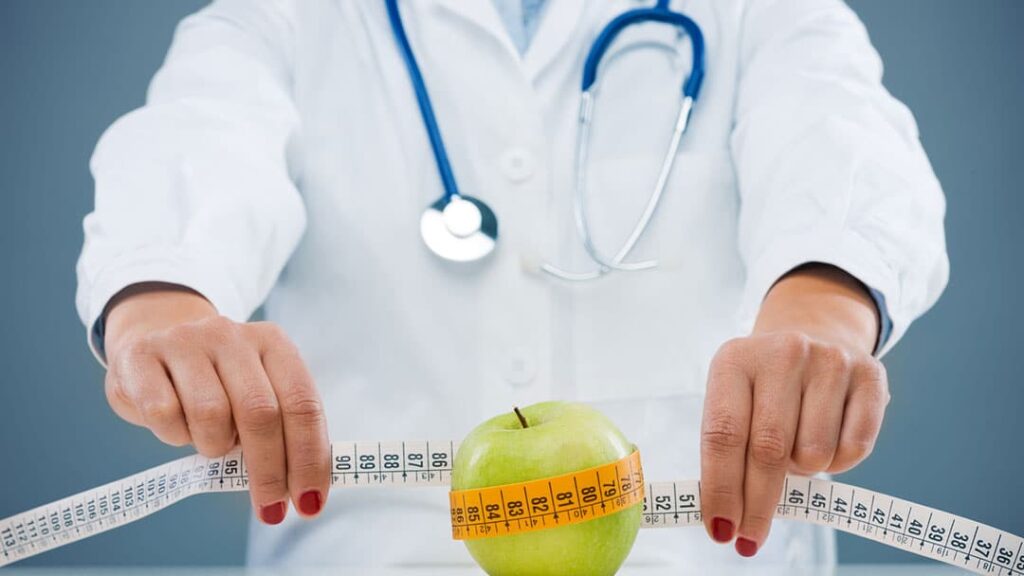
Fisher, Body By. “What Type of Doctor Should I See for Weight Loss by Dr Fisher Medical Weight Loss Centers in Philadelphia.” Https://Www.bodybyfishernow.com/, 25 Mar. 2023, www.bodybyfishernow.com/lose-weight/what-type-of-doctor-should-i-see-for-weight-loss/. Accessed 17 Apr. 2024.
Reflection
America is getting heavier and heavier by the year, and people need to start taking accountability for themselves. Compared to a far less obese country, Japan, there are many things that we can fix including what we eat and how and how much we exercise. Cutting down not only calories and portion sizes, but the amount of cheap and fatty, high calorie fast food would cause much change. Noticing how many stark differences there are highlights many things that Americans need to change in their daily life for their own health and safety. It’s one of the top issues in our society today and needs to be focused on. It is something that is able to be controlled, there are many solutions, and if other countries like Japan can keep it low, although it may take time and commitment, America can too.
Works Cited
Avenue, 677 Huntington, et al. “Obesity Causes.” Obesity Prevention Source, 21 Oct. 2012, www.hsph.harvard.edu/obesity-prevention-source/obesity-causes/#:~:text=lower%20the%20risk.-.
Harvard School of Public Health. “Obesity Prevention Strategies.” Obesity Prevention Source, 12 Apr. 2016, www.hsph.harvard.edu/obesity-prevention-source/obesity-prevention/.
Harvard T.H. Chan. “Adult Obesity.” Obesity Prevention Source, 21 Oct. 2012, www.hsph.harvard.edu/obesity-prevention-source/obesity-trends-original/obesity-rates-worldwide/.
Meldrum, David R., et al. “Obesity Pandemic: Causes, Consequences, and Solutions—but Do We Have the Will?” Fertility and Sterility, vol. 107, no. 4, Apr. 2017, pp. 833–839, www.fertstert.org/article/S0015-0282(17)30223-6/fulltext, https://doi.org/10.1016/j.fertnstert.2017.02.104.
Muhlbaum, David. “Gas Prices around the World.” Kiplinger, 2022, www.kiplinger.com/personal-finance/shopping/cars/604410/gas-prices-around-the-world.
“Obesity Causes and Treatments.” NHS Inform, 10 Mar. 2023, www.nhsinform.scot/illnesses-and-conditions/nutritional/obesity/#:~:text=The%20best%20way%20to%20treat.
Perdomo, Carolina M, et al. “Contemporary Medical, Device, and Surgical Therapies for Obesity in Adults.” The Lancet, Feb. 2023, https://doi.org/10.1016/s0140-6736(22)02403-5.
Petre, Alina. “The Japanese Diet: Benefits, Food List, and Meal Plan.” Healthline, 19 Sept. 2019, www.healthline.com/nutrition/japanese-diet.
Public health. “Why Are Americans Obese? | PublicHealth.org.” PublicHealth.org, PublicHealth.org, 2022, www.publichealth.org/public-awareness/obesity/.
Ritchie, Hannah, and Max Roser. “Obesity.” Our World in Data, 17 Jan. 2024, ourworldindata.org/obesity#:~:text=In%20many%20high%2Dincome%20countries.
World Obesity. “Ranking (% Obesity by Country), 2016.” World Obesity Federation Global Obesity Observatory, 2016, data.worldobesity.org/rankings/.Senauer, Benjamin, and Masahiko Gemma. Why Is the Obesity Rate so Low in Japan and High in the U.S.? Some Possible Economic Explanations. Edited by Benjamin Senauer and Masahiko Gemma. AgEcon Search, 2006, ageconsearch.umn.edu/record/14321/?ln=en&v=pdf. Accessed 22 Mar. 2024.